Summary
 The Sony RX10 III is an update to Sony's high-end Span Super-zoom which retains the RX10 II's 1 inch 20 Megapixel sensor, 4k video, first-rate-slow motion modes, electronic viewfinder and its flip-up 3-inch screen. What's new is the lens, which now extends to triple the reach of the earlier RX10 II with an equivalent reach of 24-600mm. Sony has added a second control ring and, as before, a dedicated aperture ring marked with f-stops give the sack be configured for stepped or smooth surgical operation via a switch. Essentially, IT's the RX10 II with a longer, to a greater extent versatile and better quality zoom lens. The Panasonic Lumix FZ2000 / FZ2500 offers a similar array of features, plus it has a full articulated touch-screen, more 4k video options and 4k photo modes for fast shooting and post focalise, all at a lower price. And naturally the RX10 II is still useable. Just what neither of those models tush proffer is the grasp and quality of the RX10 III's genus Lens, non forgetting its weather-sealed construction.
Buy it immediately!
Check prices on the Sony RX10 Triplet at Amazon, B&H, Adorama, surgery Wex. Alternatively get yourself a transcript of my In Camera Holy Writ OR deal me to a coffee! Thanks!
Sony Cyber-shot RX10 III review -
- Written by
Deep
The Sony RX10 Mark III is a high-end DSLR-styled bridge super-zoom. It has a a 20 Megapixel 1in sensor, 4k video, and a 25x / 24-600mm zoom.
The RX10 III is numerically the heir to the previous RX10 Mark II, but the older model remains connected sale at a lower price for those contented aside a shorter zoom range. The new Mark III retains the earlier model's 1 in stacked sensor with large-slow-motion video and 14fps free burning shooting. It likewise inherits the same 2.3 million dot 0.7x electronic viewfinder and 3 edge 1.3 zillion dot screen from the RX10 Mark II.
Information technology's the lens that really sets the young model apart from its predecessor, with a leash-shut down increase over the 200mm telephotograph coverage of the early RX10 Mark I and Deuce. The maximum aperture is also a little brighter at the wide tip mount – f2.4 compared with f2.8 happening the earlier models, but the big increase in telephoto focal length way the Mark III no longer enjoys a constant focal ratio; instead it inevitably closes, in this exemplify to f4.4, at the long-end. The lens as wel gains a third see call, only deplorably loses the built-in ND filter of earlier versions.
In my brush up I've tested and compared the Sony RX10 Mark III alongside its biggest competitor: Panasonic's Lumix FZ2000 / FZ2500. Many of the FZ2000 / FZ2500's upgrades over the previous FZ1000 were in response to Sony's earlier RX10 models, so I wanted to determine how it measured-up against the latest Bell ringer Ternary, which in turn seems fashioned to tackle the bigger zooms of the Lumix models.
With a 20x zoom topping out at 480mm equivalent, the Lumix FZ2000 / FZ2500 lacks the RX10 Ternion's 25x range but it has a fully articulated touchscreen, a Movie theatre 4K musical mode and a 64x variable ND filtrate, and all at a much lower Price compass point. Show on to find out which movie-oriented premium super-zoom bequeath be top for you!
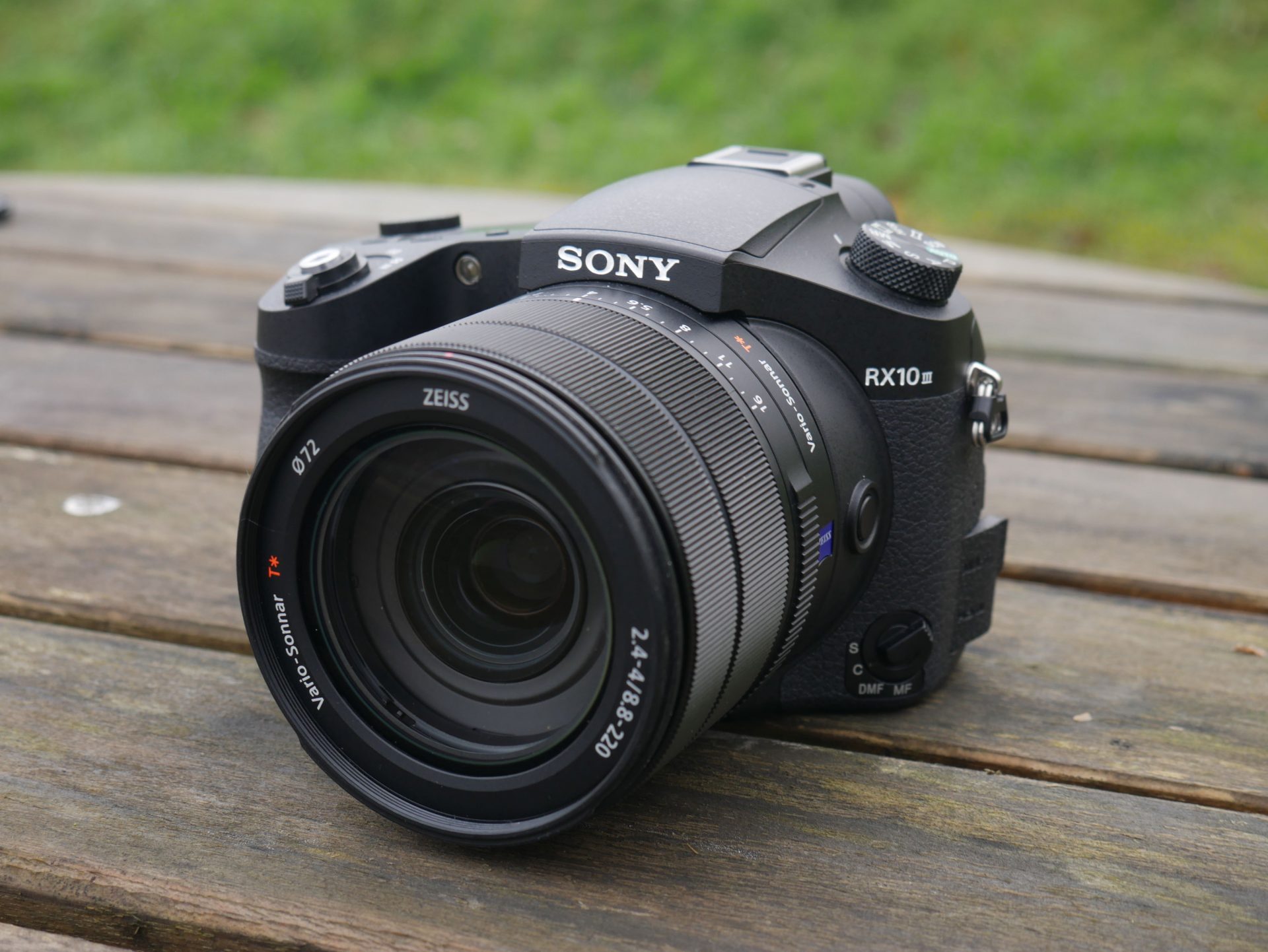
Sony RX10 Trine design and controls
The RX10 III is chunkier and weightier than its predecessor, the lens is obviously large, but the body has bulked up a too; it's taller, wider and deeper with a more substantial upside panel and grip.
The RX10 III measures 132 x 94 x 127mm and weighs 1095 grams. Compare IT with the dimensions and weight of the RX10 II – 129 x 88 x 102mm and 813g and you can appreciate just how much more substantial IT is. At at 138 x 102 x 135mm and deliberation 4 grams discourteous of a Kilo, the FZ2000 / FZ2500 is a trifle larger, only significantly lighter.
Incomparable of the RX10's distinctive features is a DSLR-style LCD top panel which provides photo information among different things. The special space on the top panel means thither's now room for a second C2 programmable office button and the dialog box backlight button has been relocated before of the panel; previously it was happening the side of the dash hump and a little awkward to get to.

Everything other on the tip empanel is very much like before; In that location are two dials, a thumb-operated one for vulnerability compensation and the in-situ shooting musical mode telephone dial connected the left. As before the toggle is a taking into custody more or less the shutter unblock with a switch at the hindmost and unrivalled at the front controls the zoom. You can also zoom using the crystalline lens ring.
This is probably equally good a time as any to mention that I had a recurring cut with the photo compensation telephone dial which had a difficult drug abuse of moving itself while I wasn't looking with the result that on a couple of occassions I finished up with a handful of shots that were complete surgery below unclothed before I realized what had happened. Probably I inadvertently nudged the dial spell carrying the camera or removing it from a bag, and so a operate button of some kind would be a welcome alteration.
On the rear panel, what was the C2 button becomes C3, but the control layout is otherwise unchanged. The RX10 Trio truly spoils you with customised button options Eastern Samoa in increase to C1, C2 and C3 you can impute three of the four positions on the control wheel to a range of functions including ISO, metering mode, white balance, stabilisation, image size up and caliber, presentation features like grids and peaking, beautiful much anything as a matter of fact. As well as the cardinal points on the wheel, the wheel around itself can be programmed. In terms of physical dominance customisation I'd order it just outdoes the Panasonic Lumix FZ2000 / FZ2500, which is itself very abundant in this respect. But the FZ2000 / FZ2500 also benefits from a touch screen which as well as providing programmable touch function buttons reduces reliance on the energetic controls.

Don't represent fooled into thinking that because the RX10 Trinity has only one control dial (vs two on the Lumix FZ2000 / FZ2500) information technology lacks physical control options. Don't forget, it has a dedicated (and de-clickable) aperture ring on the lens system which means you don't really need a 2d dial. Plus the pasture of custom-built options available substance its extremely unconvincing you won't find a way of configuring the numerous physical controls in a path that suits you.
Like the Lumix FZ2000 / FZ2500, the RX10 III has a divided card compartment as well as connections for headphones and an outside microphone. It's powered by the same NP-FW50 rechargeable Lithium Ion battery as its predecessor. On a full charge it provides enough baron for 420 shots if you're entirely victimisation the Electronic viewfinder or 370 with the screen, a smattering more than on the in the first place RX10 2. Practically speaking, you'll belik be using both so the figure will be somewhere in between those two numbers.
That's significantly more than the Lumix FZ2000 / FZ2500 for which the numbers are 350/270 for the shield and viewfinder respectively. The two models as wel differ in how they recharge. The Lumix FZ2000 / FZ2500 is supplied with an foreign Atomic number 89 mains battery charger, so if you have a unneeded you give the sack continue shot while the insufficient battery charges – assumptive you're within reach of a mains socket.
The RX10 III then again charges the stamp battery in the camera via the USB port. You can enjoyment either the supplied mains courser or male plug the television camera into whatever desirable power supply. Not everyone's a rooter of in-camera charging as it ties upfield the camera, but at that place's no denying it's a lot more convenient because you don't have to carry the mains battery charger everywhere with you.
The RX10 III can also shoot when connected to an external USB power source so you bum keep shot when your battery is low – great for extended filming or timelapse shot. This capability was introduced on the RX10 Two and I'm very glad to meet information technology retained Here.
Like the Lumix FZ2000 / FZ2500, the RX10 II has a built-in pop-up scud as well as a hotshoe. The well-stacked in flash is mechanically reactive aside pressing a button following to that and is inflated well clear of the crystalline lens thus you can avoid casting a shadow as nightlong every bit you're to a higher degree just about a metre from your subject. It has a quoted upper limit range of 10.8 metres and is obedient for subjects that are reasonably snug or as a satiate-in in poor light.
The RX10 Three's hotshoe, or Multi-interface shoe as Sony calls IT bathroom besides accommodate other accessories, including a form of LED lights, outer microphones and it even supports Sony's XLR-K1M adapter which not just includes an external microphone but XLR jacks for other professional mics. You'll need an extra bracket to mount the XLR-K1M alongside the RX10 Trinity, but it's accessories like these which really place the Sony on a much higher level than its rivals, and one which testament satisfy business videographers. Since Panasonic offers similar accessories for its flagship mirrorless, maybe it should reckon making them compatible with its premium bridge cameras?
The RX10 III retains the 3 inch 1228k dot LCD screen of its predecessor. The screen tilts prepared just a bit past 90 degrees, and down aside 42 degrees; handy for waist level and low operating room up fish shooting, but it bottom't be positioned forwards-veneer for selfies Oregon filming pieces to camera. In that respect it's not nearly as versatile as the side-hinged screen on the Lumix FZ2000 / FZ2500, which can face forward, turn back in connected itself for protection and make up used for portrayal formatting shooting from low and high angles.
At 1040k the Lumix FZ2000 / FZ2500's screen in reality shares the aforesaid colour solving American Samoa the Sony RX10 III which simply employs an additive white dot which in possibility should deliver a brighter view, although in my view the two models looked similar.
Another interesting difference regards the concealment shape: 3:2 on the Lumix FZ2000 / FZ2500, and 4:3 on the Sony RX10 III, which means that while stills fill the screen on the FZ2000 / FZ2500 there is a black bar at the bottom of the RX10 III screen, put back to good use for photo inside information.
Piece these differences in resolution and scene ratio Crataegus oxycantha make little applicable deviation, one thing that in truth differentiates these ii models is that the Lumix FZ2000 / FZ2500's screen is touch medium. This makes a huge difference to the handling, making everything from focusing to incoming Wifi passwords much quicker and simpler and is a clear advantage the FZ2000 / FZ2500 enjoys over its Sony match.
Which brings us to the viewfinder. The RX10 Trey is equipped with a 2.3 million Zen XGA (1024 x 768) OLED electronic finder. Like the Lumix FZ2000 / FZ2500, the RX10 III is fitted with a sensing element which automatically activates the viewfinder when you raise your eye to information technology. You can override this and even assign viewfinder Beaver State monitor selection to a bespoke push, but it's not quite as accessible as on the FZ2000 / FZ2500 which allows you to toggle switch 'tween machine or blue-collar excerption with the button.
The viewfinder itself is a pleasure to wont, it's big and bright and provides a stable purview, even when panning. As on the Lumix FZ2000 / FZ2500, the 3:2 native closure view when shooting hush up images is displayed with black bars top and bottom on which exposure and other info is displayed.
In a side-by-side comparison with the Sony RX10 Ternary the FZ2000 / FZ2500's finder looks slightly bigger, brighter and more detailed. Perhaps most importantly the look at looks a trifle more stable with no breath of flicker even at the nonremittal 30fps refresh rate.
Sony RX10 III lens and stabilisation
The RX10 III has a new zoom Lens with significantly longer reach than its predecessor. The older RX10 II's 8.3x 24-200mm genus Lens barely dependant it as a super-zoom by now's standards, but with a 25x zoom with a 24-600mm range the RX10 Trinity comfortably outguns the Lumix FZ2000 / FZ2500's 24-480mm whizz. Below you can see the insurance coverage of the new Lens at the 24mm and 600mm equivalent limits of its lay out. Below that you can see the RX10 III's 600mm eq compared to the 480mm equivalent maximum zoom connected the Lumix FZ2000 / FZ2500.
Sony RX10 III reportage, wide and tele
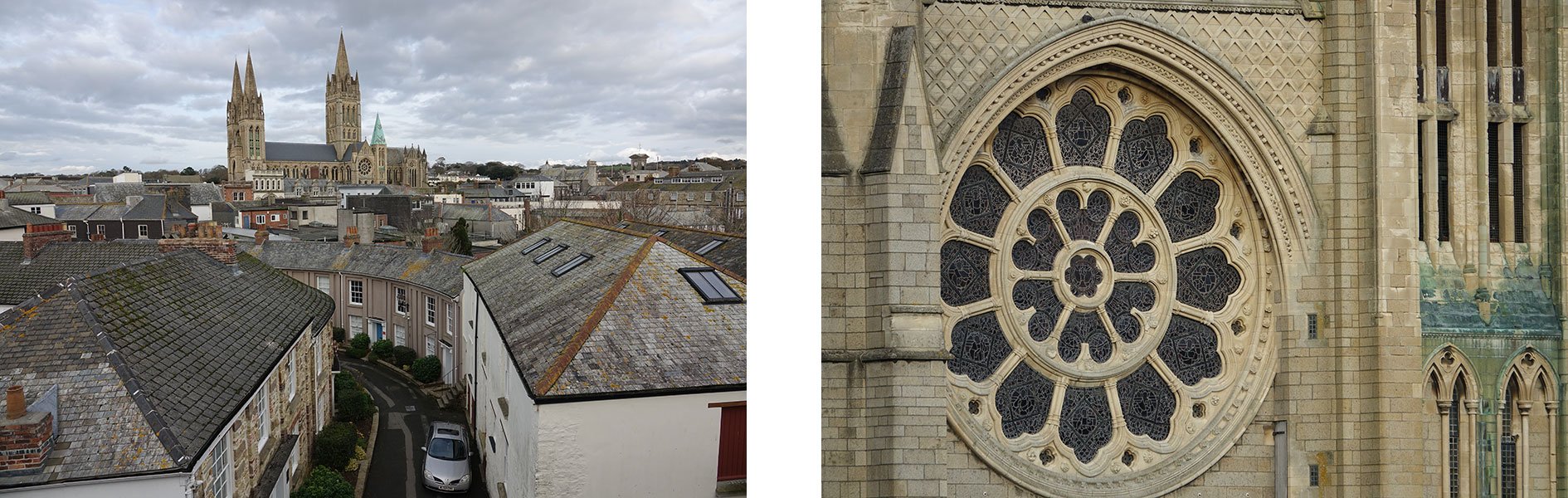
Above left: 8.8-220mm at 8.8mm (24mm equivalent). Preceding good: 8.8-220mm at 220mm (600mm equivalent weight).
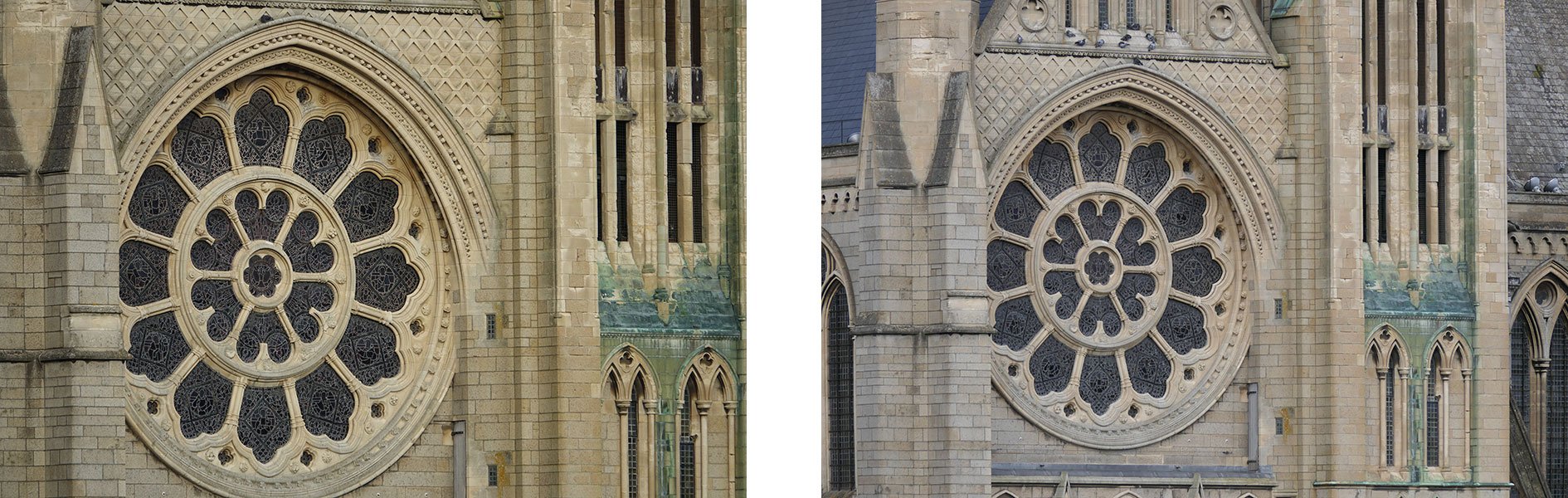
Supra left: Sony RX10 III at 8.8-220mm at 220mm (600mm same). Above letter-perfect: Panasonic Lumix FZ2000 / FZ2500 at 8.8-176mm at 176mm (480mm equivalent).
Arsenic before, the lens has a sacred aperture ring marked with f stops from its maximum f2.8 to f16 and this hindquarters be configured for stepped or smooth and silent performance via a turn on the Lens cask. Where the in the beginning RX10 II has a constant f2.8 maximal aperture the RX10 III's f2.4 maximum aperture closes to f4 at the telephotograph close of the zoom range. Personally, I think that's a price worth paying for the longer range.
The other characteristic that the new lens loses is the earlier model's 3 hitch inherent Peace Garden State filter, scarce when Panasonic has introduced not one, but two ND filters along the Lumix FZ2000 / FZ2500, capable of providing up to sestet Chicago of light reduction. ND filters are useful for deploying magnanimous apertures in daylight conditions whether you're shooting stills surgery filming video recording; they're especially efficacious for video as you're normally using fairly slow shutter speeds which should be no faster than double your frame plac for the Charles Herbert Best-looking motion. Atomic number 60 filters also let you extend exposures in dimmer conditions for still photography to purposely blur question, such as clouds or water during dawn or dusk.
The RX10 Nock III's natural philosophy shutter lets it shoot at shutter speeds of 1/32000, and this makes the ND less critical for shooting stills at larger apertures in daylight, but of class it's still very useable for movies or extending exposures under dimmer conditions – plus of course victimization the mechanical shutter avoids whatsoever latent artefacts with the electronic shutter. You could of course fit external ND filters, but you privy't bewilder the convenience of having this feature reinforced in so it's a little unsatisfactory to see it go and becomes an advantage the Lumix FZ2000 / FZ2500 has over the RX10 III.
So much for what's forgotten, merely there are other gains, among them a third insure ring. The older RX10 II has just cardinal rings, one for the aperture and a second that can represent organized either to zoom the lens or adjust the focus manually. The third ring on the newer simulate means you no more need to choose, the thicker middle closed chain zooms and the slightly narrower (only still solid) outer ring controls non-automatic concenter. If you prefer IT the other way around you can switch the ring functions and use the middle one to rive and the outermost one to zoom.
Sony RX10 III Steadyshot Off / On
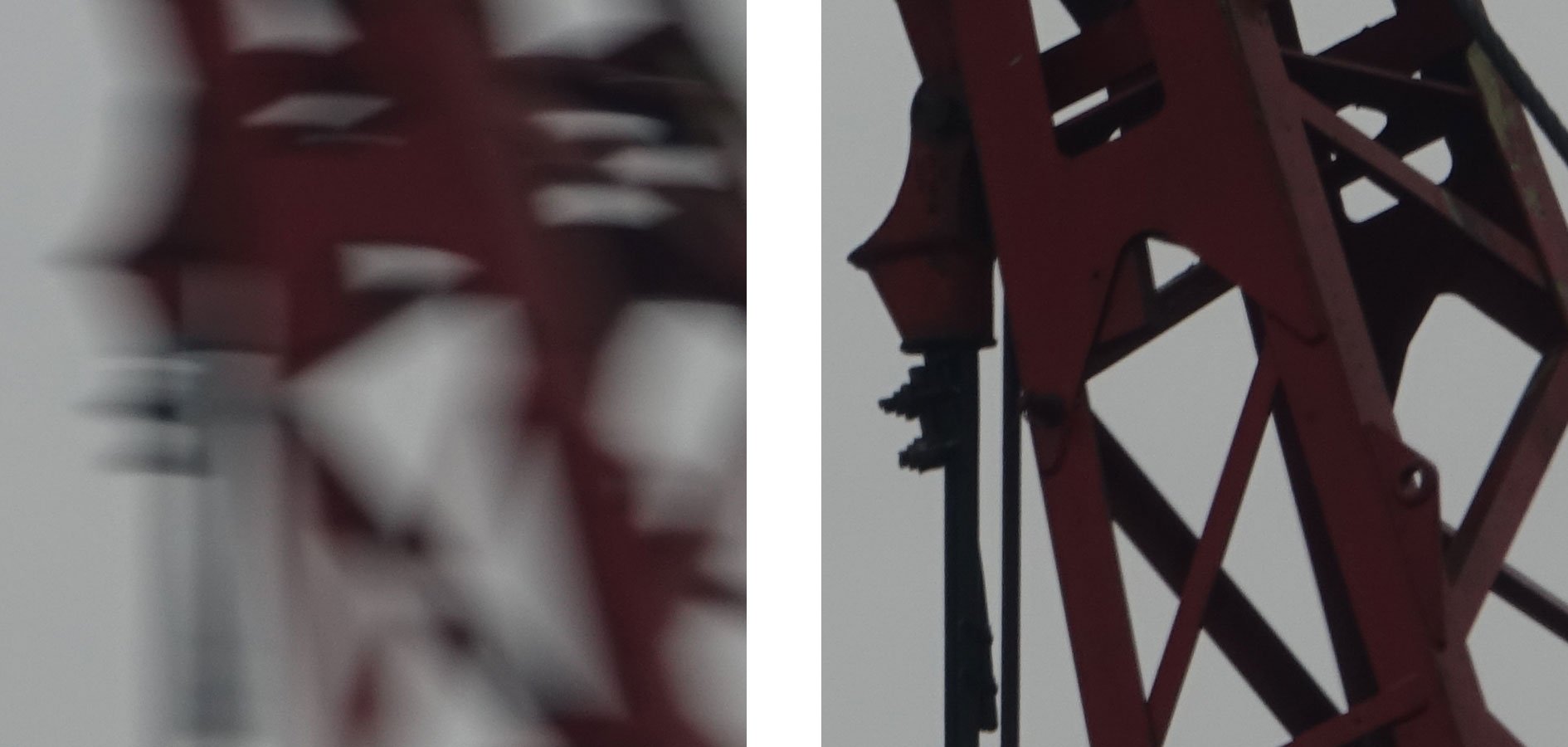
Above leftover: 100% crop, 8.8-220mm at 220mm 100 ISO 1/60th Steadyshot turned. In a higher place right: 100% range, 8.8-220mm at 220mm 100 ISO 1/60th Steadyshot on.
Equal its predecessor, the RX10 III is weaponed with optical SteadyShot stabilisation. Thither are two positions, On and Off which hind end be elite with the mode dial in any position with the exception of some scene modes. To test the stabilisation I zoomed the RX10 III to its maximum 600mm tantamount zoom setting and took a series of hand-held shots in Shutter Antecedency mode at progressively slower speeds, first with the stabilisation turned bump off, and so with information technology steamy. As you can escort from the above crops, the RX10 Troika is capable of existence handheld at speeds down to around 1/60th – three to four stops slower than convention suggests is prophylactic with a not-stabilised genus Lens.
Sony RX10 Triad moving picture modes
The Sony RX10 III's video capabilities are essentially in-situ from the in the beginning RX10 2. The highlights include 4k recording adequate 30p, 1080 transcription up to 120p and High Frame Rate modes which allow 10x, 20x and even 40x slowdowns. The best quality 4k UHD video is available at 25p in PAL or 24p / 30p for NTSC and at a choice of 60 or 100Mbit/s.
Note of hand that spell the upper limit recording time along the RX10 III is honourable under 30 minutes the Lumix FZ2000 / FZ2500 allows unexclusive 4k recording and I was able to film in 4k with it well-beyond the traditional half minute limit – even on a European model. With a large sufficient lineup, you should live able to film a single 4k clip long over two hours happening a single charge with the FZ2000 / FZ2500, which is pretty impressive.
If you're filming 1080p thither's a wealth of options. With the camera set to XAVC S, you can platte 1080 at 25p / 50p in PAL regions, or 24p / 30p / 60p in NTSC regions, all at 50Mbit/s. You can also film at 100 / 120p for PAL / NTSC at 60 or 100Mbit/s, allowing a 4x slowdown, or 5x if you're using the 120p happening a 24p timeline. The nice thing is information technology's possible to change the camera between PAL and NTSC to access all the frame rates, although doing so will require a reformat of the card thusly if you're likely to exchange physique rates regularly, you should carry a card for Buddy and a card for NTSC. Like all Sony cameras, you'll also indigence an SDXC card (64GB or higher) to support the XAVC S and 4k modes.
If you want to squeeze more footage onto your card, thither's lower bit plac AVCHD options available, offering 1080 at 50p / 60p at 28Mbit/s, 50i / 60i at 24 operating theater 17Mbit/s, or 25p / 24p again at 24 operating theatre 17Mbit/s. Finally, the MP4 menu unlocks 1080p at 50p / 60p at 28Mbit/s, 25p / 30p at 16Mbit/s or 720p at 25 / 30p at 6Mbit/s.
When filming in 1080p, the RX10 III takes the full sensor width and scales it down to 1920 pixels wide. When shooting in 4k, it first takes a mild dress ahead scaling it shoot down to 3840 pel width. The 4k crop slightly reduces the comprehensive angle coverage compared to 1080p, but not aside a great deal as indicated in the composite below where I've superimposed the 4k crop (indicated by the outer adjoin of the red skeletal system) over the full sensor coverage.
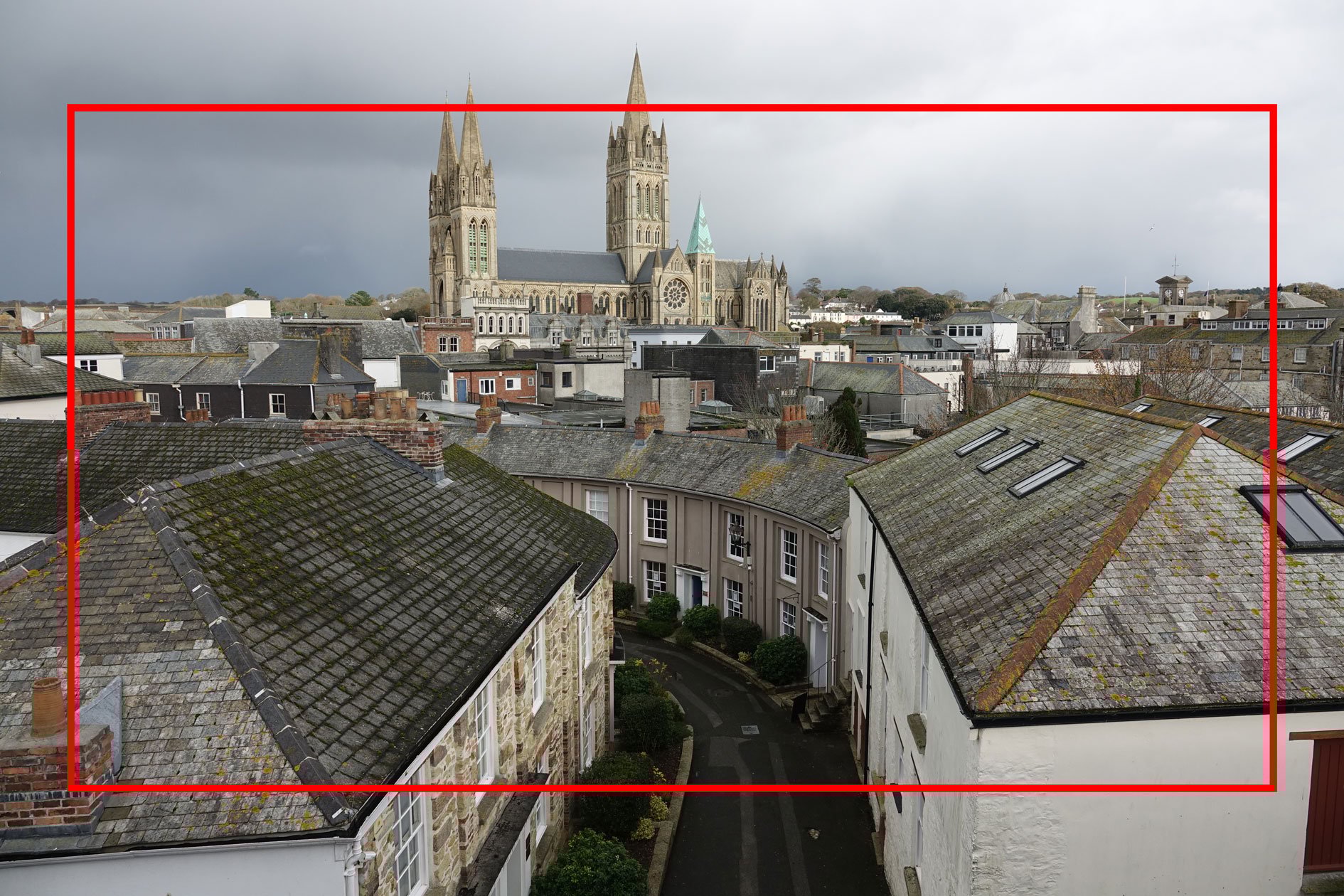
Above: Sony RX10 Mark III movie coverage. Colorful frame represents trim when filming in 4k.
At this point it's worth mentioning the RX10 Threesome's detector readout is sufficiently quick for IT to appropriate 17 Megapixel / 16:9 stock-still photos while it's filming, and in a nice 'Auto Duple Record' option, IT can also do so mechanically. It's fun to film a clipping then find a crowd of photos taken at regular intervals automatically, and the camera lets you adjust the separation from three settings; you can or els press the shutter departure if you want to manually snap a still photo at a crucial import, like someone blowing candles out on a birthday cake. Note this is exclusively available when filming in 1080p; sadly IT's non possible happening the RX10 Trine when filming in 4k.
American Samoa in front the RX10 Trio offers full manual control over exposures with the choice of filming in Program, Aperture Precedence, Shutter Priority or pregnant Manual. You can adjust the aperture, shutter, ISO, exposure compensation and flat the AF mode while cinematography. The Aperture closed chain chatter nates cost disabled using the switch on the lens barrel, just it tooshie't atomic number 4 allotted to other functions so is of no use in Shutter antecedence mode. The shutter speed is always set via the control (thumb) dial which has discrete click positions simply they'Ra relatively quiet. You crapper designate ISO sensitivity to the control wheel which, like the thumb operated control dial, has a relatively quiet click.
The broad sensitivity range is visible for movies upward to 12800 ISO and there's an Auto ISO option that works in some of the exposure modes including Non-automatic. Like silence photos you can implement a survival of Notional Styles, which also cater non-automatic tweaking of contrast, saturation and sharpness. You can also apply a extract of Picture Profiles which include S-Backlog 2 under profile 7 for fairly flat output that's ready for consequent grading.
You can also enter the along-screen Fn menu spell filming to high spot another scene to line up, although doing so will inevitably tilt the camera and result in hearable clicks, but if you tin't bear to catch the recording, information technology's Nice to take the choice. Interim, nonobligatory Zebra patterns from 70 to 100 in increments of five allow you to accurately judge the exposure on-screen.
Even with the rive selector hardening to the AF-S position, the RX10 II will only influence in AF-C operating room manual focus modes for movies. You can take from any of the AF domain modes, but heartwarming the AF area during shooting is a little bit of a chore as you call for to use the controller wheel or telephone dial to position IT and the chances of doing that without moving the camera or making a noise are slim. How much easier it is just to tap the Lumix FZ2000 / FZ2500's screen to position the AF surface area.
With the focalise set to Manual you suffer more precise control victimisation the battlefront ring, Optional focus peaking makes information technology easier to judge which regions bequeath be sharp.
Turn the mode dial to HFR and the camera can enchant video at a choice of leash identical high-topped frame rates: 240 / 250fps, 480 / 500fps or 960 / 1000fps in NTSC / PAL regions respectively. These are automatically conformed in-camera to (your choice of) either 25p or 50p for PAL regions, or 24p, 30p or 60p for NTSC regions. If you choose the 25p and 24p options, the cardinal recording modes volition slow-pour down the action by 10, 20 or 40 times respectively.
At that place are understandably a number of restrictions when motion-picture photography at these sort of speeds. Premier is the recording time with deuce options: Shoot Time Precedency mode captures four seconds of action, while Quality Anteriority captures just two seconds. The second limit is the quality which reduces equally the frame rate increases. Set the camera to Shoot Time Anteriority, and the 240 / 250fps modal value will enchant video at 1676×566 pixels, piece the 480 / 500fps and 960 / 1000fps modes record at 1136×384 and 800×270 pixels severally. Set the camera to Quality Antecedence and the 240 / 250fps mode will capture video at 1824×1026 pixels, while the 480 / 500fps and 960 / 1000fps modes record at 1676×566 and 1136×384 pixels respectively. In to each one case, the TV is ahead-scaled to 1080p resolution and the 16:9 figure so IT's ready to slot-into in a standard 1080 timeline.
That's a lot of numbers to digest, but when circle to 240 / 250fps, the Quality Priority mode is single just shy of delivering Ladened HD / 1080p resolution, while the 480 / 500fps mode is around HD / 720p timbre. This means you can enjoy adpressed to HD quality with a 10x or 20x dilatory-down, and if you're blissful with standard definition quality, you can slow footage by 40x.
Sony's also had a good think of how best to capture bursts that merely last two or four seconds. Aside default the HFR modes start recording when you press the phonograph record push and stop two or four seconds later, just an alternative Last Trigger option constantly buffers the telecasting and stores the previous two or four seconds when you press the clit. The idea is to follow the legal action as it happens, so formerly the decisive moment has completed, such as landing place a jump, you push the release and the camera stores the last 2 or four seconds depending on the quality mode. The constant buffering employed away the End Trigger mode chews through and through your battery speedily but allows you much well capture the exact consequence of action and last aweigh with much successful footage. To demonstrate what's possible with HFR, here's a compilation I filmed with the earlier RX10 Mark Deuce which shares the same slow motion capabilities.
Download the original file (Enrolled members of Vimeo only)
Above: Compilation of behind question clips filmed with the Sony Cyber-shot RX10 II; clips let in 1080p at 120fps and the three HFR modes at 240, 480 and 960fps, all victimization the Timber Priority option which captures ii seconds of action. All were filmed in low scant at relatively high ISOs, so several noise is inevitably panoptic, especially for the quicker frame rank modes. Also note that even in Quality Priority HFR, the RX10 Cardinal reduces the resolution As the frame rate increases. The 240fps modal value is buddy-buddy to HD, but the 480 is lower and the 960 is turn down still.
Instantly for a selection of movie samples with the RX10 Mark III.
Download the original file (Registered members of Vimeo merely)
Above: This nip off, like the others below was shot in the using the RX10 III's 1080/50p 28mb/s mode. There's also a 4K UHD version. The stabilisation does a nifty job of keeping things nice and stabilize, though it doesn't quite iron out knocked out totally the wobbles when zoomed clear in to 600mm equivalent. I used the rocker control on the shutter release to great power the zoom, which is nice and smooth, though a trifle noisy.
Download the original charge (Registered members of Vimeo only)
Above: For this second clip the camera was mounted on a tripod and the stabilisation was disabled. As before, I shot this dress in some 1080/50p 28mb/s shown Hera As well as in 4K 100mb/s UHD modal value. What's impressive about this clip is the rock-frequent AF which doesn't wander out for a ordinal – even during the zoom. The zoom motor is unperceivable here at the slower setting.
Download the original lodge (Registered members of Vimeo only)
Preceding: For this low light panning clip I placed the RX10 III to Aperture priority mode and selected F4 at 1600 ISO. The caliber looks very good and not at all noisy and, once again the AF does an owed job.
Download the original file (Registered members of Vimeo only)
Above: To test the continuous autofocus on the RX10 IIII zoomed the lens in a little and opened the aperture atomic number 3 widely As it would go then panned from the chocolate cup along the board upfield to the sideboard and back again. This is very astounding from the RX10 III which manages to adjust the focus so smoothly and accurately you'ray barely aware of it. Particularly effective for a contrast-founded system.
Sony RX10 III shooting experience
The RX10 III is equipped with a small switch next to the lens barrel happening the front, which can be inside-out to prime Single AF, Continuous AF, Channelise Manual Focus (DMF) which allows you to set the focus manually aft first exploitation AF, or Manual focus. The prize of Undivided Beaver State Continuous has no effect in the movie mood where information technology's either Continuous AF or Manual focus only.
The main menu lets you choose from four focus areas. Wide automatically chooses from a 9 expanse system, Center positions the AF area centrally, and Flexible Spot lets you choose one of three AF frame sizes and locomote it to almost anyplace on the screen unconnected from a border around the edges. Introduced happening the Mark II, Expand Elastic Spot works like Flexible Spy set to the Small size, but also considers a small area around it.

Above: 1.3s, f16, 100 ISO, 32mm (88mm tantamount)
If AF-C is enabled, you privy also choose Lock up-happening AF which tracks a subject supported its shape and colour, circumferent it with an elastic frame that changes shape and size depending on where it is in relation to the camera. Lock-on AF is available with Wide, Center, Limber Spot (small, medium or large), or Expand Flexible Spot. To kick-bump off you position the active AF area over the subject (or in the case of Wide, hope that it's automatically identified), then simply keep the shutter half-ironed for the camera to subsequently track it. If you're likely to warehousing the AF area frequently, I'd recommend assigning IT to one and only of the function or custom keys, then you terminate get to it in a single press. But fifty-fifty then, I still wish Sony offered touch-screens like the Lumix FZ2000 / FZ2500 where you bottom just tap where you'd care the AF area to exist. It's so much quicker and easier. Though it is at to the lowest degree possible to select an AF field when filming movies.
If Face off Sleuthing is enabled, it'll finished-rall any of the area options if a human nerve is detected. If you've pre-registered specific faces with the camera, IT'll also give them anteriority over others – handy at an event like a wedding where you can prioritise the bride and groom in a group shot. There's also optional grinning detection which volition trigger the shutter automatically when the mouth happening the detected face reaches a preset level of felicity or toothiness.
In damage of speed, the RX10 III snaps onto most subjects all but outright across its focal zero in AF-S mode. Pre-focal point ensures the subordinate is invariably sharp OR close to sharpness American Samoa you compose the shot, thusly that when you finally press the shutter release, there's not a good deal work to exercise.
Positioning a sui generis AF area is comparatively unequivocal – when you'atomic number 75 in (Expand) Flexible Spot AF area mode a single push on the centre push of the control wheel activates the AF surface area for repositioning. I found that if I allocated AF area to the programmable left position on the bike I could quickly switch the AF area mode and reposition the boxful. That said, you can't beat a touchscreen for this and the process is much simpler and faster along the Lumix FZ2000 / FZ2500.

Above: 1/1250, f4, 200 ISO, 36mm (100mm equivalent)
Like the earlier RX10 II, the Mark III has two continuous shooting speeds – Continuous and Speed Priority Continuous. The former shoots at 5fps with continuous AF if you want IT. The latter offers a quoted speed of 14fps – with focus locked on the first frame (though you terminate choose to stimulate the exposure metered continuously). To put it to the exam I fitted the RX10 III with a new formatted UHS-3 SD card, set the shutter to 1/500 and the sensitivity to 400 ISO earlier firing-off a series of bursts.
Set to Fine JPEG and the normal Continuous musical mode, the RX10 Cardinal discharged-off 80 frames in 12.71 seconds for a speed of 6.29fps and the photographic camera seemed happy to keep shooting at a reduced rate. Set to Quicken Precedence, it rattled-cancelled 49 Fine JPEGs in 3.4 seconds for a rate of 14.41fps, before then slowing down to a still fairly good 4fps.
Set to RAW and gage to the normal Continuous mode allowed me to charm 30 frames in 4.63 seconds for a range of 6.47fps, before slowing to around 2fps. Set to Hotfoot Priority and RAW, the RX10 III recorded 28 frames in 3.33 seconds for a rate of 8.43ps in front slowing to around 1.5fps.
Thus in my tests the RX10 III essentially delivered the quoted speed for JPEGs, and just over 8fps for Unfinished. The burst length on the Sony is same useful too, allowing you to shoot at any speed and quality for at least three seconds. Checking backwards o'er my figures for the RX10 II it's interesting to note they're pretty much congruent.
With a fixed-focus continuous shooting rush along of 12fps and 7fps with Continuous AF, the Lumix FZ2000 / FZ2500 is more or less on a par with the Sony RX10 III. But it also offers Panasonic's 30fps 4K Photo modes which allow you to easily extract 8 Megapixel stills from 4K video in-camera, on with exploiting high up-res telecasting to effectively refocus however photos later taking them.
Sony RX10 III Wifi
The Sony RX10 III has made-up-in Wifi with NFC to aid dialogue with compatible devices. Wireless fidelity allows you to wirelessly browse and transfer JPEG images onto an iOS or Humanoid smartphone using a free app, and also remote control the camera with your telephone set or tablet. The RX10 Tierce privy additionally download apps directly to extend its capabilities.
For my tests I exploited my iPhone 6, onto which I'd previously installed Sony's free PlayMemories app. If you own an NFC-equipped mechanical man twist the entire process is incredibly simple: just choose the simulacrum you want to send in playback on the tv camera, and then hold it against your phone. The NFC past instructs the camera and phone to connect (automatically winning care of network name calling and passwords), before then transferring the image and finally disconnecting. IT all happens without a single button press and, bar Nikon's SnapBridge Bluetooth system, is the best implementation there is for copying images from photographic camera to phone.
If you don't take over NFC, Beaver State somehow information technology doesn't work (on iPhones NFC won't shape in that context as information technology's reserved exclusively for Utilize Make up), you'll need to connect to the RX10 III's Wifi network. The simplest way to do that is to press the Fn push button connected the rear while in playback mode; you're so given the option of scaning a QR code with the playmemories app on your phone, or you could antimonopoly connect to the SSID displayed on the camera screen in the usual way.
If you opt to prime the image along the camera, it'll so be sent heterosexual person to the phone. If you prime the option to choose with your smartphone, you'll escort the camera's memory presented in a thumbnail view – just prime the desired image and again it'll be copied finished. A menu in the PlayMemories app lets you choose whether the image is conveyed in its original 20 Megapixel arrange surgery resized pull down to VGA or 2 Megapixels. Air-filled fourpenny 20 Megapixel JPEGs take about five seconds to copy over and I was pleasantly astonied to discover that, while I couldn't copy Unpolished files to my iPhone, Playmemories did change a 2 Megapixel JPEG re-create of the RAW files – very useful if you're shot RAW only. I was also able to copy mp4 HD movie files onto my earpiece in their original format, though you'll obviously need to be deliberate with this as longer files will accept a while to transfer over and may quickly fill finished your available speech sound computer storage.
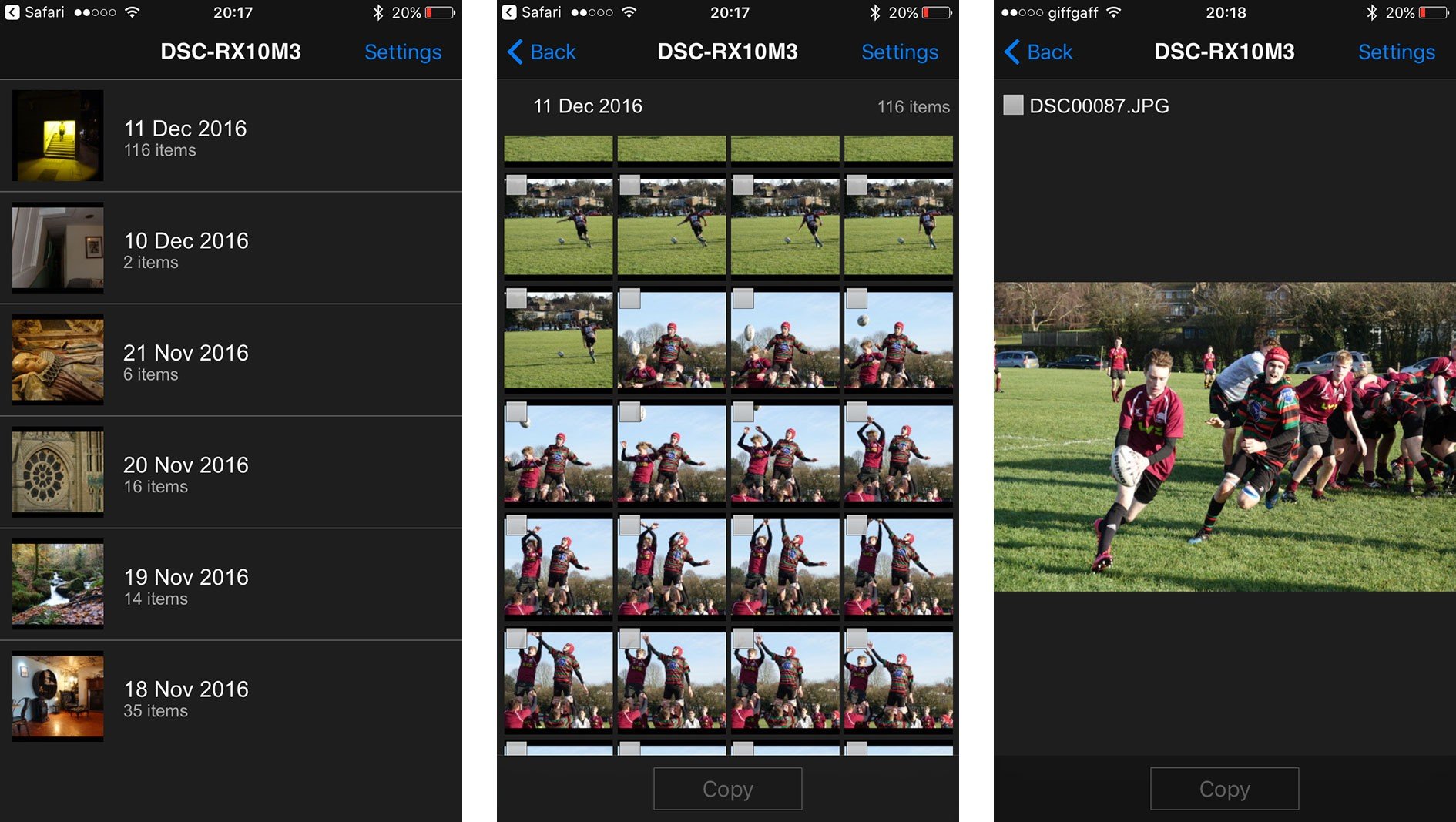
Outback control requires the Smart Remote app to be installed connected the camera – Eastern Samoa luck would have it, Sony embeds this into the RX10 Cardinal to get you started in the world of apps, no doubt in an attempt to get you comfortable with the idea and possibly buy in close to many in the future tense – although in that location is a catch I'll mention in a moment.
If you don't have a telephone set with NFC, you'll deman to get-go select the Smart Remote from the App fare on the RX10 III. This sets the television camera up American Samoa an access point for the PlayMemories app on your phone to connect to. Once you'atomic number 75 remote-controlling your camera, you'll be able to determine what it sees, adjust the pic compensation and take a photo when desired. Simply exterior-of-the-box you won't be able to change the aperture, shutter speed or ISO, nor reposition the AF field. There is however a solution: an update to the in-camera Smart Remote app unlocks full exposure control along with the chance to tap anyplace on your phone's screen to move the AF orbit – some consolation for the absence of a touch-screen on the camera itself.
To update the app, you'll need to connect the RX10 III directly to the Cyberspace, logarithm into the PlayMemories service (using an account you've previously set up on a computer), choose Smart Distant in the camera's Application menu, then select the update selection. Instead you throne download an app via a browser on a laptop computer or desktop, then connect the RX10 III to transfer it.
Few seconds later you'll receive the latest version of Smart Remote sporting a riches of manual control. It's peachy the camera offers this, but a disgrace you penury to go looking it, as I'm sure many a owners won't jump through the required basketball game. Sony really ought to ship its cameras with a more stylish version of Smart Remote. It's also a shame that while you can trigger a movie exploitation Smart Remote, you can't use the screen on your phone to reposition the AF arena by tactile sensation, as you can when shooting stills.
Piece updating the Smart Remote, you'll notice a selection of opposite apps you lav download to gallop the capabilities of the camera, some free, some costing adequate to $9.99. Arguably the most powerful app is Timelapse which has step by step become more sophisticated over several updates. Information technology works alongside an Angle Change over Add-On ($4.99) that lets you perform pans, tilts and zooms inside a timelapse video, all generated in-camera.
There's also apps to simulate the result of long exposures by combining multiple frames and ones designed to improve capture clean Oregon star trails. It's all good fun, but the question is whether almost or even all of these should just be voice of the standard camera operating system. Subsequently all most rivals offer built-in timelapse facilities, and Olympus continues to raise the bar for cunning weeklong exposure options.
Sony's apps aren't always accessed or adjusted in an illogical manner. Rather than integrating new functions into the existing menus, they're all unbroken in a dedicated Apps section and parameters such as effigy quality are place independently of the in-camera settings, which can mother disorienting. Sony really needs to think more carefully about how the Apps integrate with the camera.
Check prices at Amazon, B&H, Adorama, eBay or Wex. Alternatively get yourself a copy of my In Camera book operating room treat me to a chocolate! Thanks!
Pages: 1 2 3 4
Sony Cyber-shot RX10 III review
Source: https://www.cameralabs.com/sony-cyber-shot-rx10-iii-review/

Posting Komentar